

Floris Weegink
Field CTO
4 min read
6 October 2026
Code is cheap, good software is not
These days, everyone and their dog can build software quickly and cheaply. Henk from Finance throws a few prompts into an AI tool and, an hour later, there’s a working app. And honestly? That’s pretty damn cool. A prototype that used to take weeks can now be ready before lunch. Vibe coding gives you superpowers. Or does it?
The thing is: generating code is only part of software development. You still need to figure out what exactly you’re building, who you’re building it for and what requirements it needs to meet. And once it’s up and running, there’s maintenance, security, updates, governance and everything that can break along the way.
How much time goes into each part depends on how you build. The fact that you need to think about all of them doesn’t change.
Building is the fun part, but it’s not the whole story
Designing, building, testing and maintaining are all part of software development. How the work is divided between them varies quite a bit. With vibe coding, you might have a first version up and running incredibly quickly. With agentic coding, AI can take on much more of the development work. And with low-code, parts of the design, development and maintenance are handled by the platform itself.
So AI making development faster and cheaper is very good news. But it doesn’t make the rest disappear. If you go full steam ahead without properly thinking about design, security, ownership and maintenance (looking at you, Henk), you’ll mainly end up with something faster that someone still needs to take responsibility for later.
The questions nobody asks
Before a single line of code gets written, there’s a whole stack of questions waiting for you. What does the business actually need, separate from the solution they already have in mind? Who will own this app? Who maintains it if the person who built it moves on? What happens if the whole application goes down on a Friday afternoon? And perhaps most importantly: is it actually secure, or could your customer data accidentally end up out in the open?
These are questions worth spending some time on upfront. Skip them and they’ll come back later, usually when the app is already running and making changes has become a lot more complicated. Whether you’re building with low-code, vibe coding or custom development, these are decisions you need to make consciously before and during development.
Working isn’t the same as good
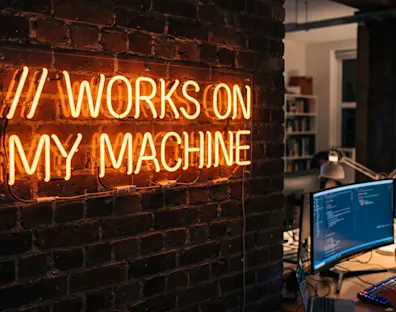
The tricky thing about an app that was built a little too quickly is that it usually works just fine. You open it, click around and at first glance everything looks great. Until you start asking who should have access, what happens when it crashes and who’s responsible for maintaining it. Suddenly, that “working” app isn’t quite as solid as you thought.
Take a simple app that receives orders and prepares them for processing. It works perfectly in the demo. Then a customer submits an unusual order, two product codes don’t match and there’s nothing in place to catch the error. Sure, the app was built in an afternoon. But handling those exceptions, setting up logging and deciding who steps in when something goes wrong: that’s software development too.
Where the real gains are
Being able to build faster is simply good news. A prototype that used to take weeks can sometimes be built in an afternoon with vibe coding. Coding agents can take complete chunks of development work off developers’ hands. And low-code platforms give you a lot of functionality out of the box.
The right approach depends on what you’re building. For a short-lived internal prototype, vibe coding might be exactly what you need. For an application that will support a critical business process for years, you’ll have very different requirements around security, maintenance, integrations and scalability.
So don’t start by asking which tool will let you build fastest. Start with what your application needs to do, how critical it is and what happens after you hit ‘deploy’.
Once you’ve got that clear, you’ll be in a much better position to decide how to build it.
We’ve got your back
As an IT manager, you probably knew all of this already. But chances are a Henk will show up at your desk sooner or later saying: “I already built a quick app myself. You can just do that these days, right?”
We made our application decision tree for exactly that conversation. It helps you ask the right questions and choose the right approach before development starts. So next time the business wants an app yesterday, you’ve got something to work with.

Want to know more?
Bob Warnars
Commercial Lead
4 min read
Vibe coding, low-code or custom: choosing the right tech for your app

6 min read
Agentic coding: When should you let AI help build your application?

3 min read
When vibe coding is the right vibe
2 min read
From a cloud solution to critical infrastructure in the logistics ecosystem